Why Movement is Earning its Place, Too
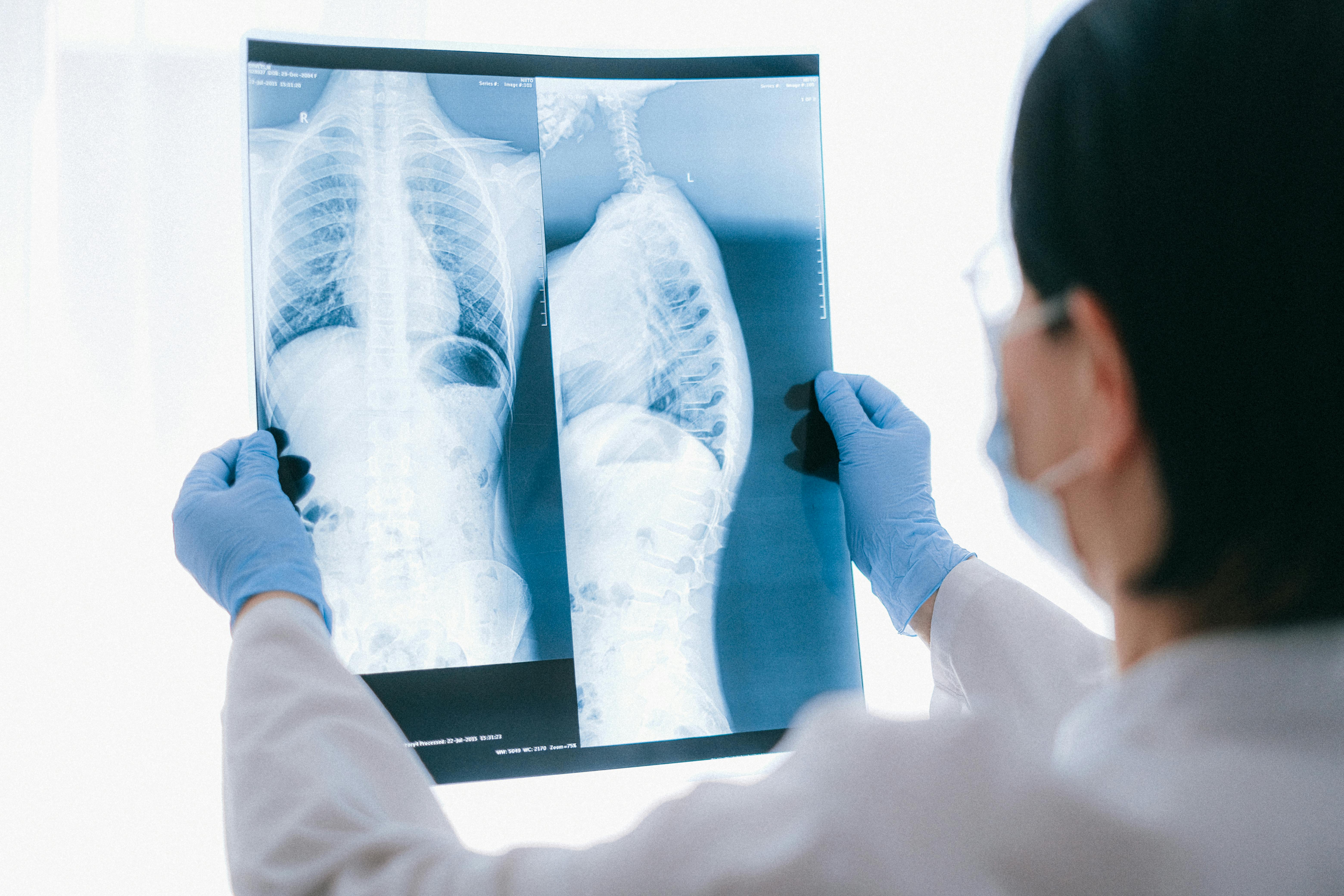
Radiographs show how patients stand, but symptoms often emerge when they move. Many patients who appear well aligned on films report fatigue, imbalance, or difficulty walking through their daily environments. These real-world limitations are invisible on static imaging.
Arima et al. showed that patients with adult spinal deformity (ASD) may appear relatively well aligned on standing radiographs yet walk with significantly greater forward trunk tilt. Here, motion reveals real-world postural deficits that static imaging failures to capture¹. To understand patients as they live, we need data rooted in movement. That data is gait.
Walking as a Reflection of the Spine
Gait captures alignment, balance, compensation, and energy efficiency in motion. In many patients, gait changes precede worsening pain or radiographic progression.
Recent evidence underscores its value. In a 2023 study of 173 adults with spinal deformity, Mekhael et al. showed that gait- and kinematic-based models predicted quality of life more accurately than radiographs alone². The authors concluded that movement analysis should be incorporated into patient assessment.
Established work supports this link between gait and functional status. Yagi et al. (2017) found that patients relying more heavily on compensatory strategies—pelvic retroversion, knee flexion, trunk shift—had worse ODI and SRS scores³. Gait speed is equally powerful. In a meta-analysis of more than 34,000 older adults, Studenski et al. (2011) found that each 0.1 m/s increase in gait speed was associated with a 12 percent reduction in mortality risk⁴.
Gait also reveals risks that films cannot. Asada et al. (2022) showed that increases in thoracic kyphosis during walking predicted proximal junctional kyphosis after surgery⁵, even when standing films appeared adequate.
Radiographs show structure. Gait shows how patients manage that structure in motion.
Why Gait Analysis Is Finally Ready for the Clinic
For decades, gait analysis was limited to research labs due to the cost and complexity of multi-camera systems, markers, and specialized staff. That barrier has now shifted. Markerless, video-based tools can now estimate 3D gait kinematics from standard video recordings, with sagittal-plane hip and knee flexion showing strong correlations with optical motion capture⁶. A brief walk in a clinic hallway now can yield meaningful data on posture, gait speed, symmetry, and compensatory patterns.
Integrating Gait Into the Spine Care Ecosystem
Quantitative gait analysis is still not routine in spine care, but the case for its implementation is compelling. Gait metrics capture compensation, predict quality of life, and stratify surgical risk in ways static imaging cannot. With AI-driven video tools, clinicians can detect imbalance earlier and track recovery objectively, often before radiographs or patient-reported outcomes change.
In spine surgery, the goal is not just alignment but restored movement and independence. Gait deserves a place in routine practice, and modern tools like Momentum are making that possible.
Ready to implement gait analysis in your clinic?
Momentum makes dynamic movement assessment fast, scalable, and easy to integrate into real-world workflows. Book a call with Momentum Spine to see it in action.
References
Arima H, Yamato Y, Hasegawa T, et al. Discrepancy between standing posture and sagittal balance during walking in adult spinal deformity patients. Spine. 2017;42(1):E25–E30.
Mekhael E., El Rachkidi R., Saliby R. M., Nassim N., Semaan K., Massaad A., et al. Functional assessment using 3D movement analysis can better predict health-related quality of life outcomes in patients with adult spinal deformity: a machine learning approach. Front Surg. 2023;10:1166734.
Yagi M., Kaneko S., Yato Y., Asazuma T. Standing balance and compensatory mechanisms in patients with adult spinal deformity. Spine (Phila Pa 1976). 2017;42(10):E584–E591.
Studenski S., Perera S., Patel K., et al. Gait speed and survival in older adults. JAMA. 2011;305(1):50–58.
Asada, T., et al. Can Proximal Junctional Kyphosis after Surgery for Adult Spinal Deformity Be Predicted by Preoperative Dynamic Sagittal Alignment Change with 3D Gait Analysis? A Case–Control Study. J. Clin. Med. 2022, 11, 5871. https://doi.org/ 10.3390/jcm11195871
Nakano N., Sakura T., Ueda K., et al. Evaluation of 3D markerless motion capture accuracy using OpenPose with multiple video cameras. Sci Rep. 2020;10:19181.
Disclaimer:
Information in this article is provided for general educational purposes only and does not constitute medical advice. Momentum Spine’s cleared indications relate to surface topography and postural assessment; dynamic movement and gait-related features described in this article reflect ongoing research and are not intended for clinical decision-making.